Sync, shred, and stay safe on the slopes.
Case Study
The Problem
As a freestyle skier, I’ve found outdoor kiosks notoriously difficult to operate in extreme cold. Removing gloves for basic interactions causes physical discomfort, while heavy sun glare on outdated screens often makes interfaces unreadable. Currently, resort solutions are fragmented, failing to integrate real-time mountain intelligence and group synchronization into a single interface.
"Perceived usefulness and ease-of-use are the #1 drivers for kiosk adoption in high-stress environments."
The Solution
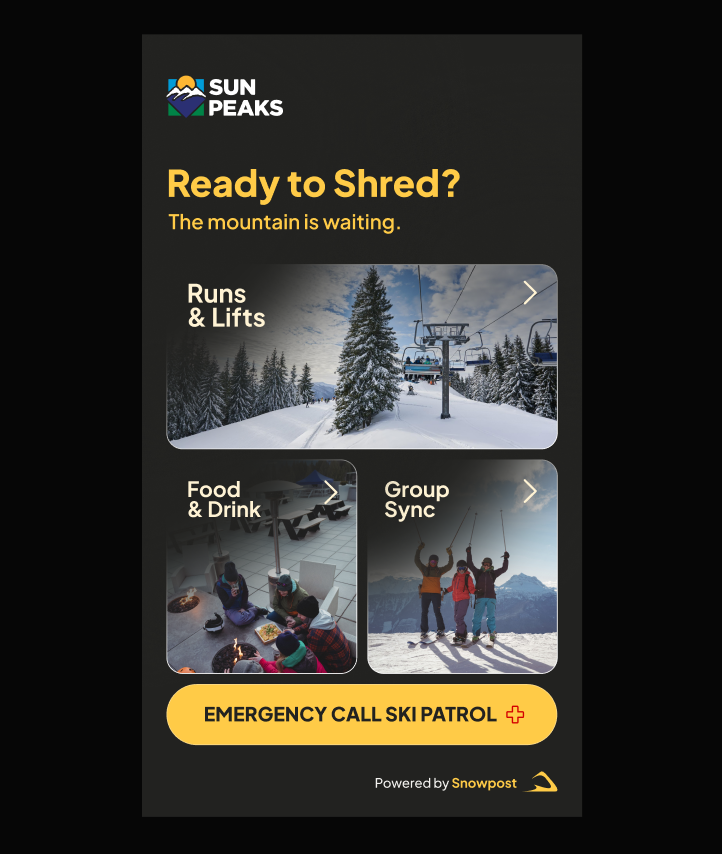
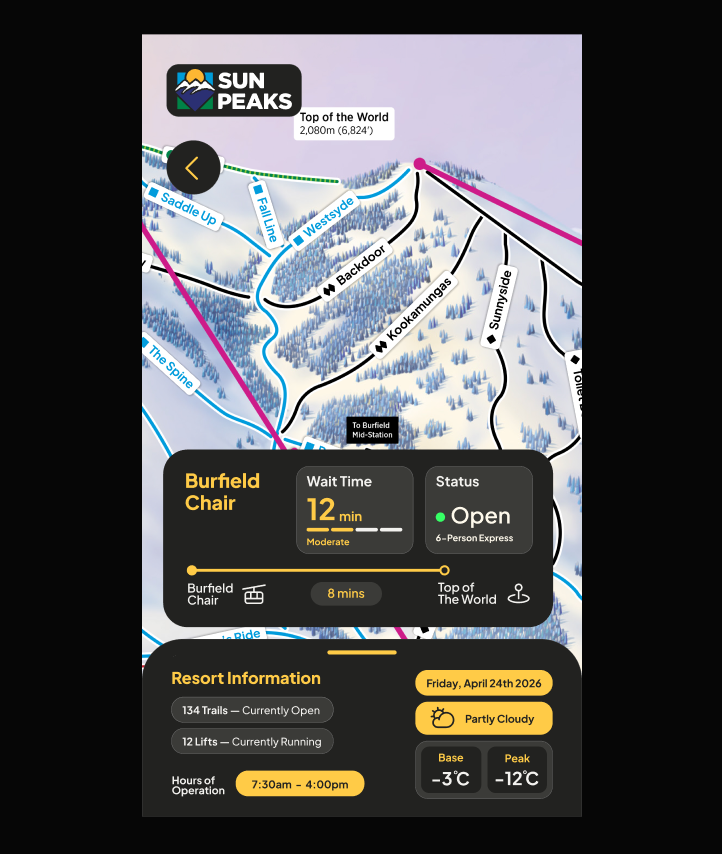
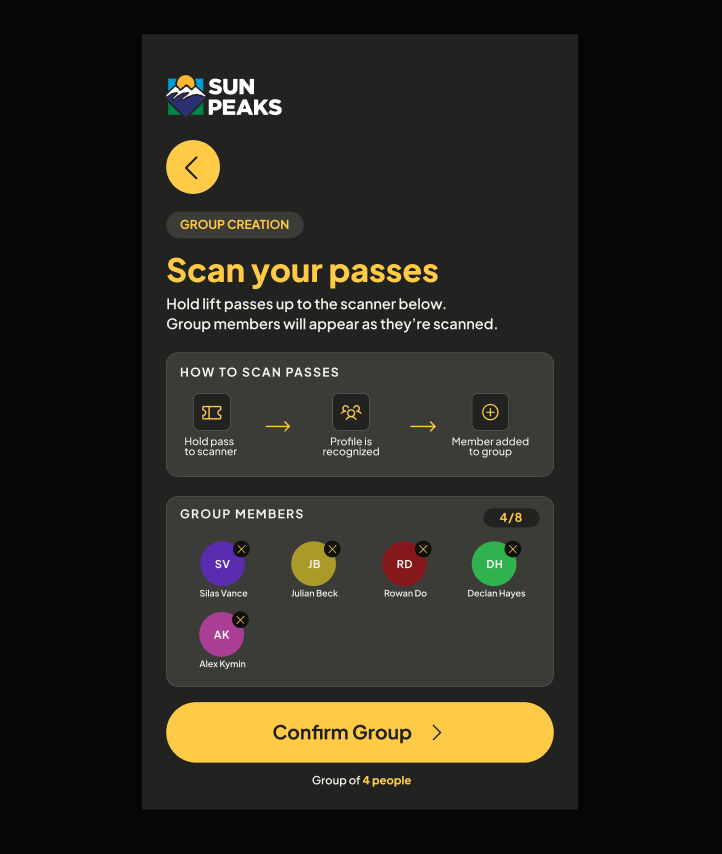
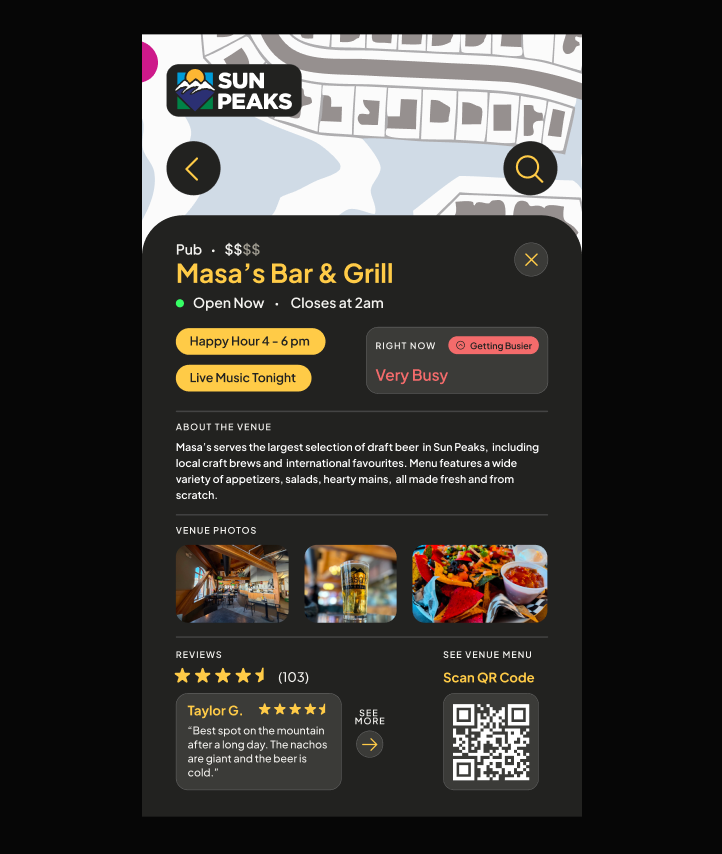
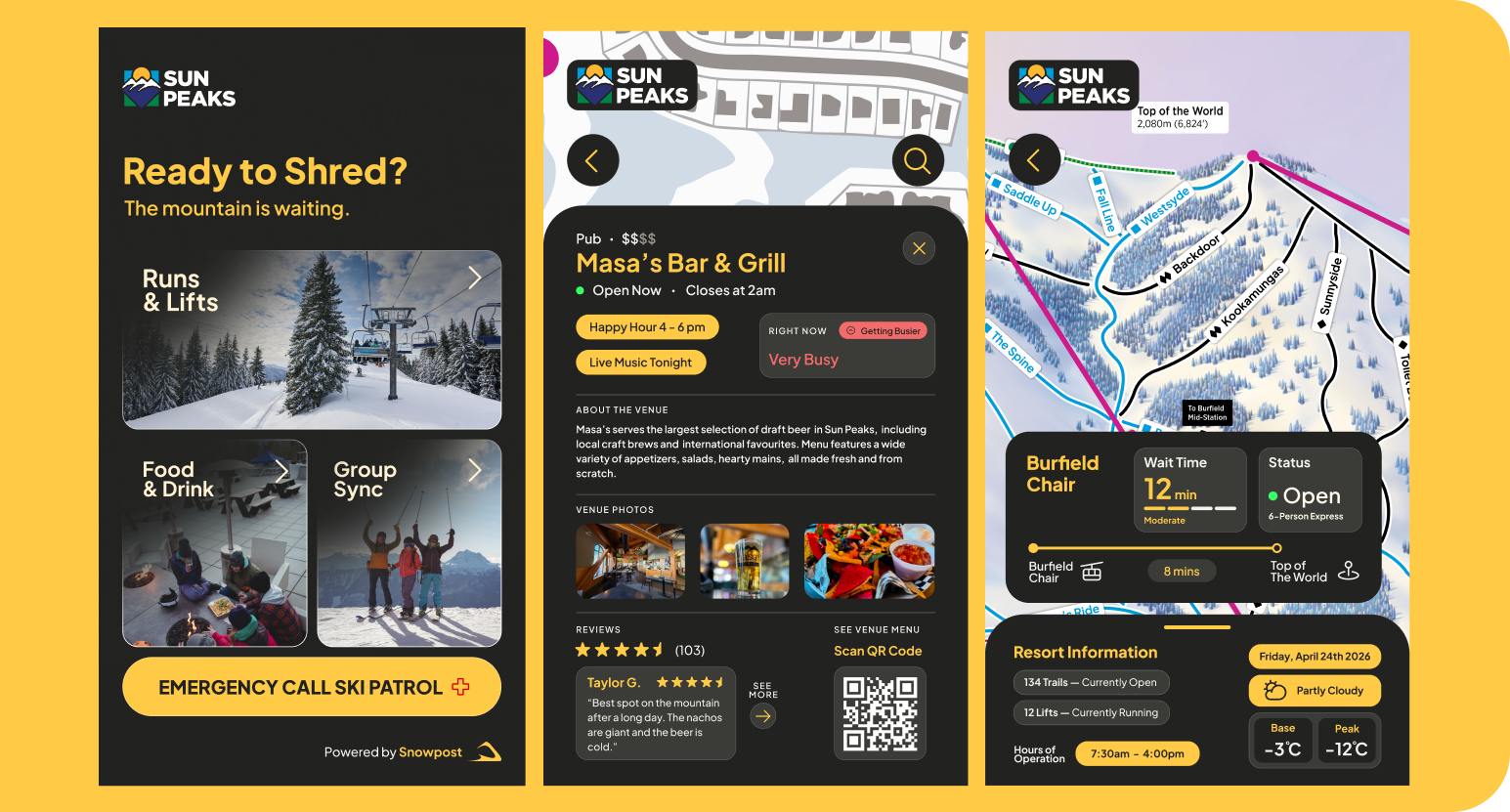
Snowpost optimizes the typical resort kiosk for the cold, gloved user. By consolidating fragmented resort features into a unified interface, I integrated real-time mountain updates, après-ski planning, group-sync, and emergency Ski Patrol connectivity. The design prioritizes high-contrast accessibility to combat sun glare and and uses large touch-points to eliminate the need for glove removal.
The Method
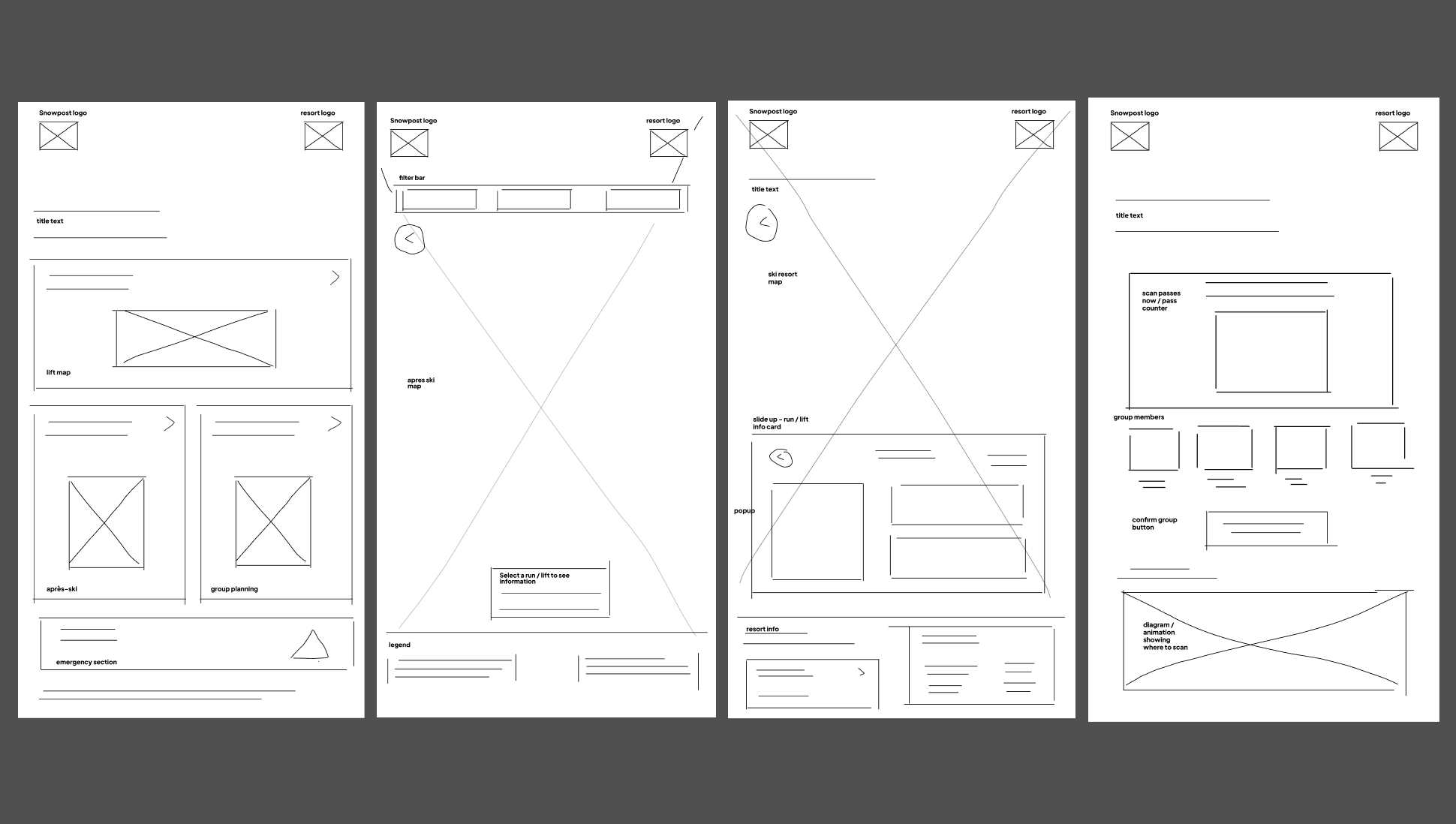
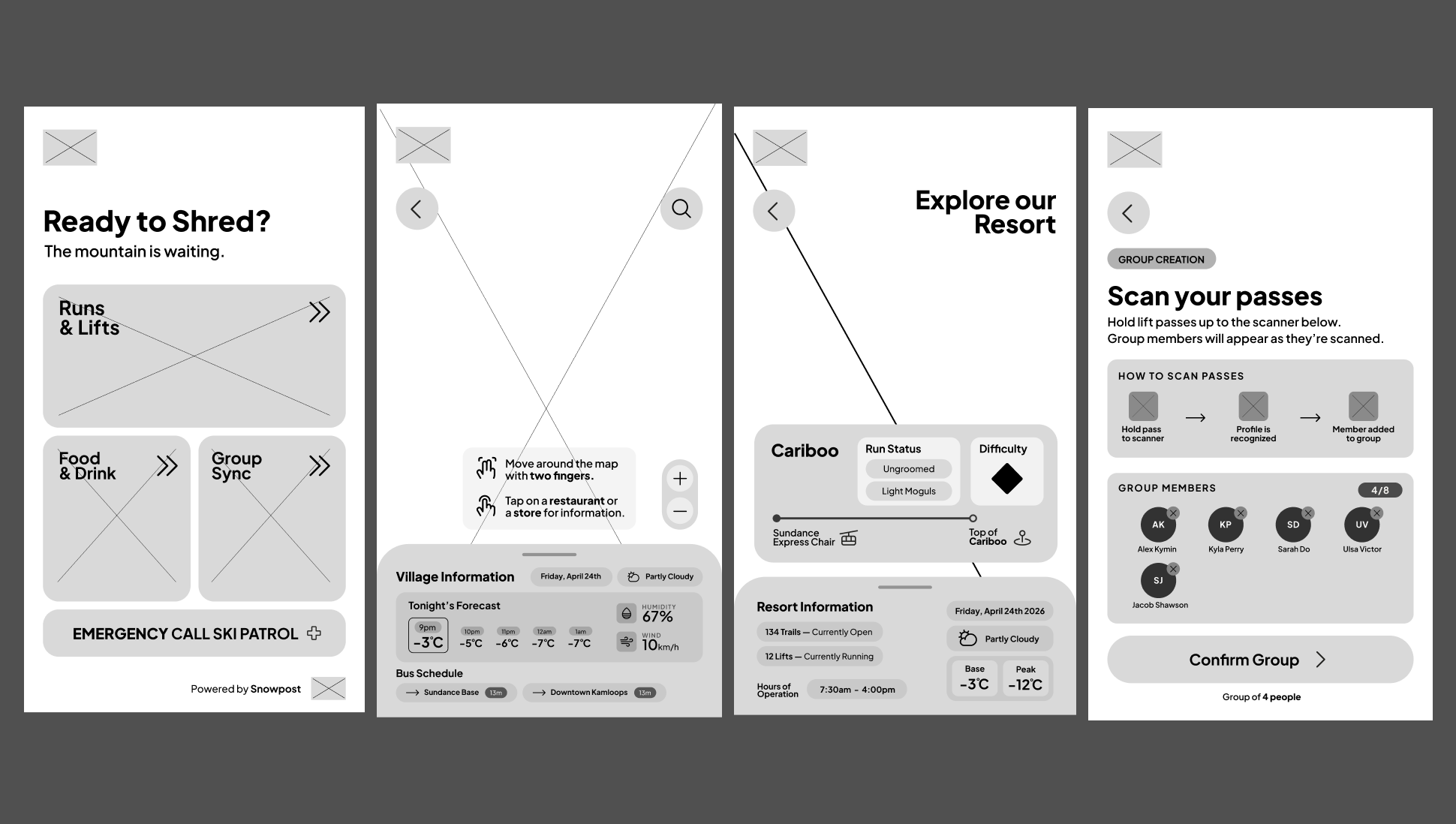
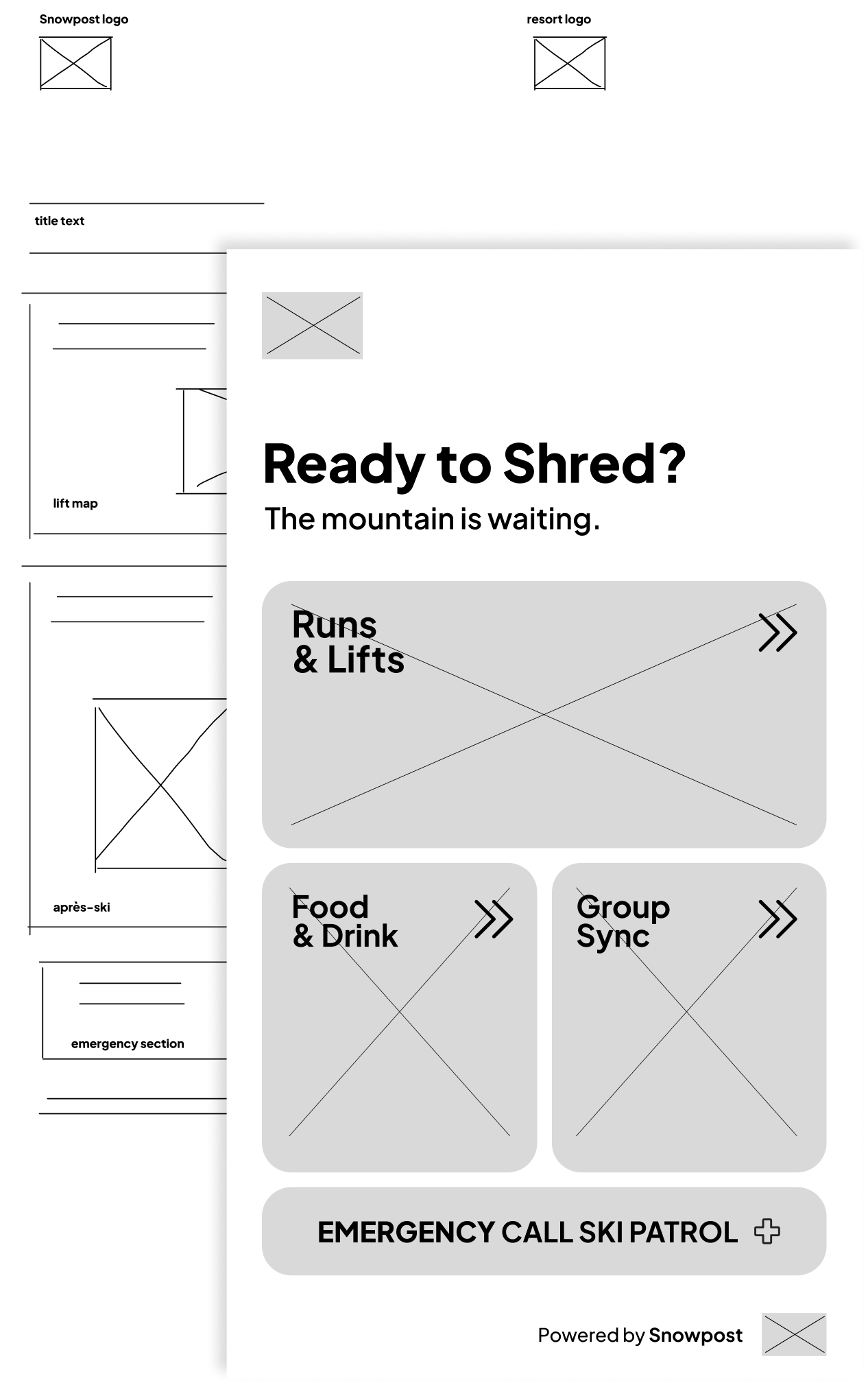
The design for SnowPost began with competitive research and exploring kiosk UI systems to identify common pain points in existing kiosk systems. I used these insights to organize my content and define the desired user experience. After mapping the user flow, I moved from low-fidelity to mid-fidelity wireframes, allowing me to block out information sections specifically for gloved users.
The final high-fidelity prototyped screens implement a high-contrast, minimalist design that prioritizes visibility and ease of use in harsh outdoor conditions.
Skills Used
Project Showcase