Artifical satellites are machines sent into orbit by humans to help with gps, weather and tv!
Space is the ultimate playground, and Earth is our home. We explore the cosmos far away and right here below our feet!
Satellites in orbiting Earth are our “eyes in the sky,” helping us track climate changes to keep our air cool and sea levels just right.
We explore the moon and planets like Mars to become experts at protecting our incredible planet Earth.
Mercury is the smallest planet and the closest to our Sun! However, it isn't the hottest, that title belongs to Venus.
A year on Mercury lasts just 88 Earth days! But, a day on Mercury takes 59 Earth days because of its incredibly slow rotation.
Mercury has no moons and zero rings!
Mercury's surface can range anywhere from 430°C to -180°C!
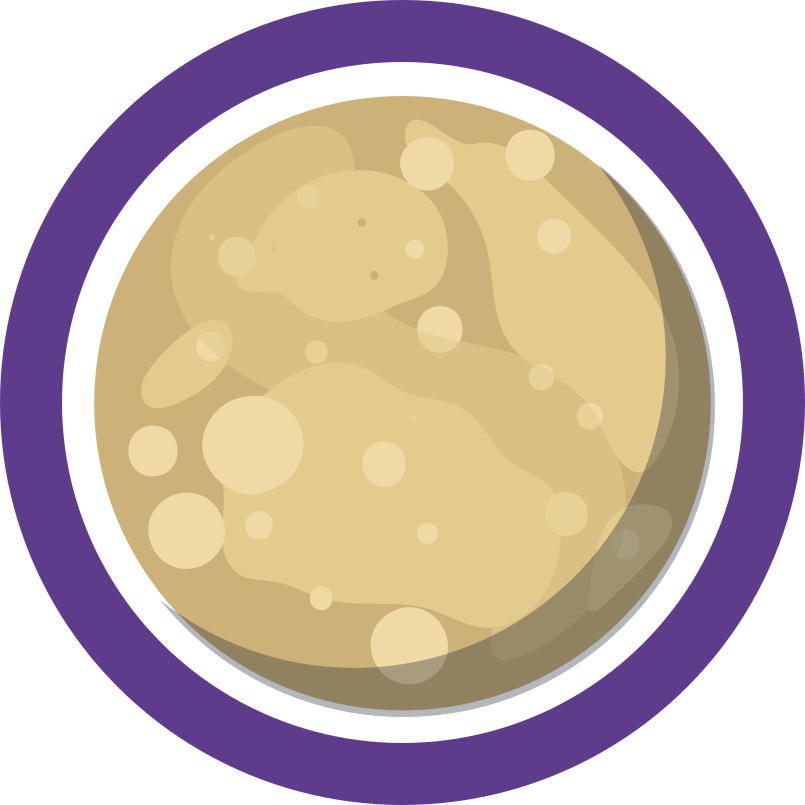
Venus is the second planet from the Sun and the hottest planet in our solar system! Surface temperatures can reach a scorching 465°C!
Venus spins in the opposite direction to most planets, which means the Sun rises in the west and sets in the east!
A day on Venus is actually longer than a year on venus!
Although Venus is often nicknamed "Earth's twin", it's extreme temperatures make it anything but habitable.

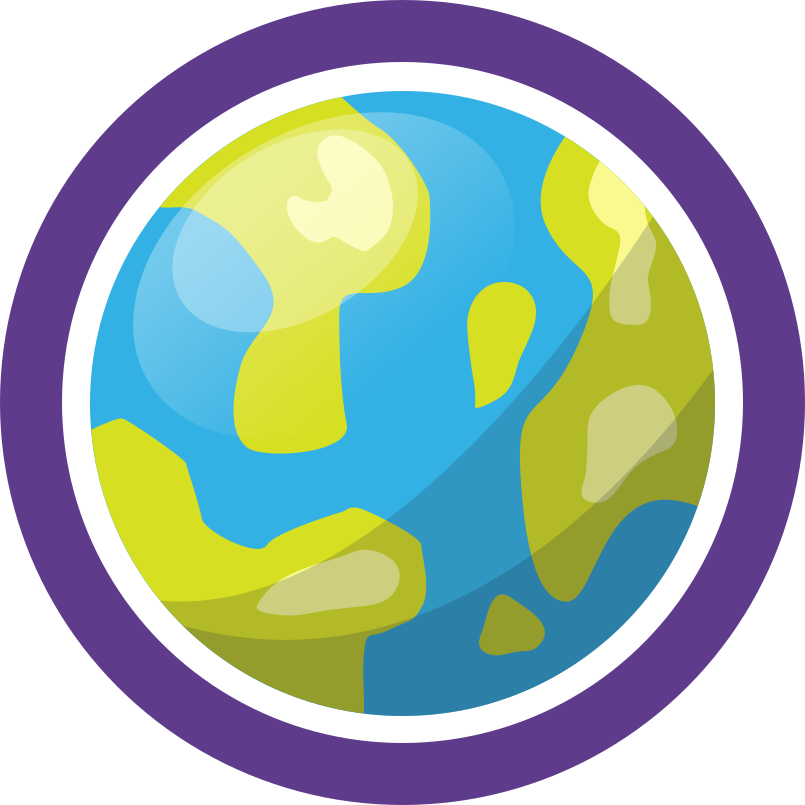
Earth is our home and the only known planet in our universe to hold forms of life!
Around 71% of Earth's surface is covered in water (H20), giving it its beautiful blue appearance when seen from space.
A day on earth is actually 23 hours and 56 minutes, not 24 full hours!
Earth is the most dense planet in our solar system.
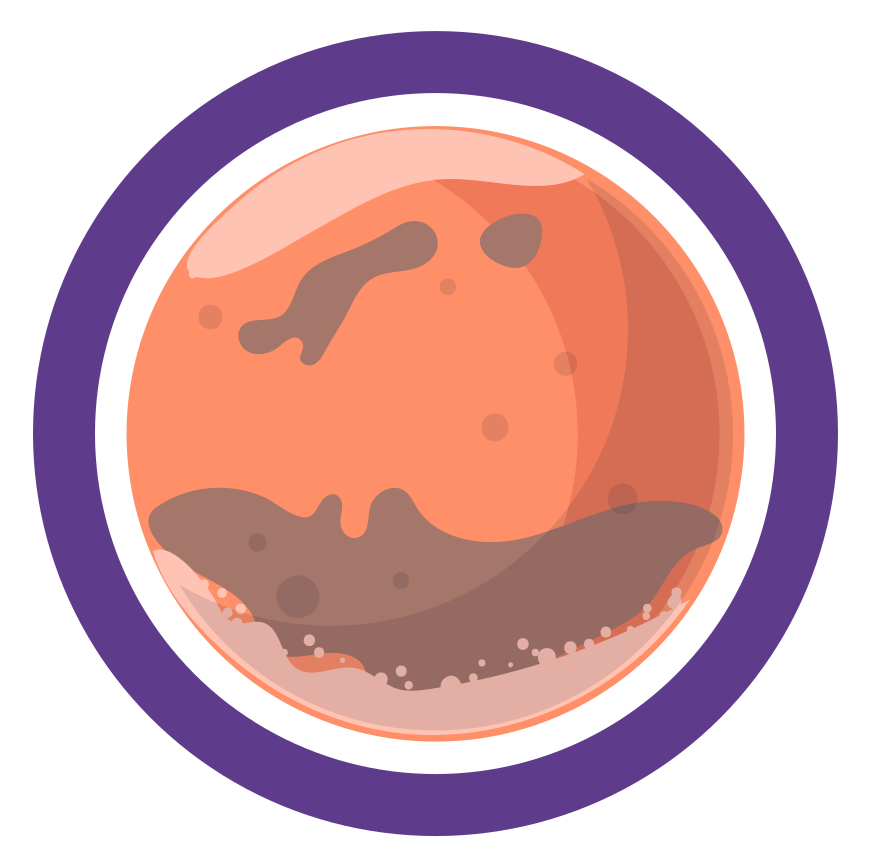
Mars is the fourth planet from the Sun. Mars is nicknamed the "Red Planet" because of excess iron oxide on the crust of the planet.
Mars is also home to Olympus Mons, a mountain that stands three times as tall as Mount Everest!
Unlike Earth, Mars actually has two moons! Phobos and Deimos.
Humans are planning on "terraforming" Mars in the future. In other words, making it another home for us humans!
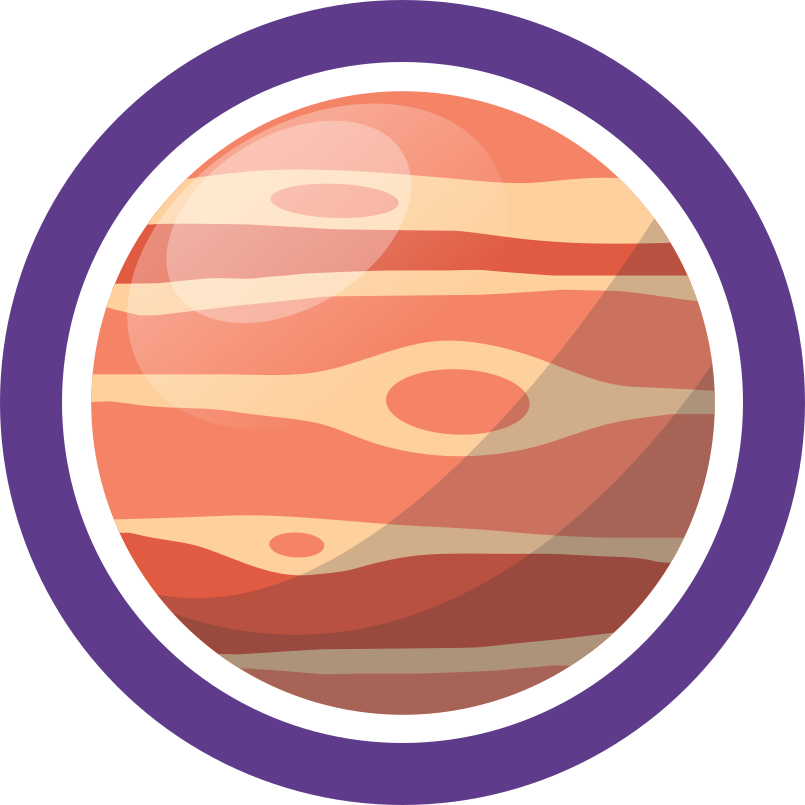
Jupiter is the largest planet in our solar system. It's found after Mars, making it the fifth planet in line from the sun.
Jupiter is super cool because it's the fastest-spinning planet in our solar system. It spins so fast, a day is only 10 hours long!
You could fit 954 Earths inside Jupiter!
Jupiter has a very famous "Great Red Spot". A giant storm that has been raging for at least 350 years.
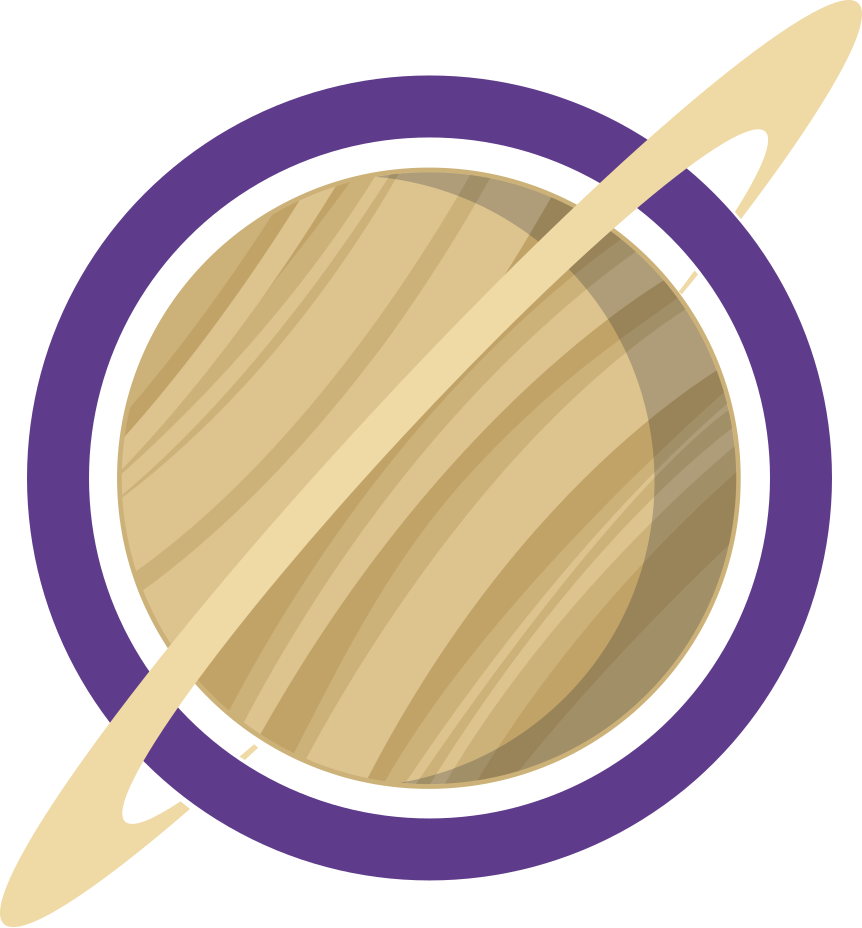
Saturn is the sixth planet from the Sun and is very famous for it's massive ring system, which is made up of billions of pieces of ice and rock.
Although Saturn is the second largest planet, it is the least dense. It could technically float on water!
Saturn has the most moons in our solar system, there are 146!
Saturn's rings are close to 282,000 kilometres in diameter, but only 10 metres thick!
Uranus is the seventh planet in our solar system, and rotates on it's side. Its "North Pole" and "South Pole" are pointed towards the Sun!
Uranus is a planet composed primarily of water, methane and ammonia ice. Its beautiful blue-green colour is caused from the methane in its atmosphere!
A season on Uranus lasts 21 years! Hope it's not winter!
Humans thought Uranus was a star, before William Herschel discovered it with a telescope in 1781.

Neptune is the eighth and most distant planet from the Sun, which means making a full orbit around the Sun takes much longer.
It takes Neptune 165 Earth years to make a full rotation around the Sun (one Neptune year)
Neptune has 16 known moons, with Triton being the largest one!
Neptune has the strongest wind speeds in our solar system, with speeds reachig up to 2000km!

Play our 12 exclusive space games, including AstroExplorer 3, our newest addition! Learn about distant galaxies and the math behind letting us discover them.
Learn even more about our own solar system, distant galaxies and space journeys throughout history!
Explore how to volunteer your time and change the way you live to save our beautiful planet from Climate Change.
